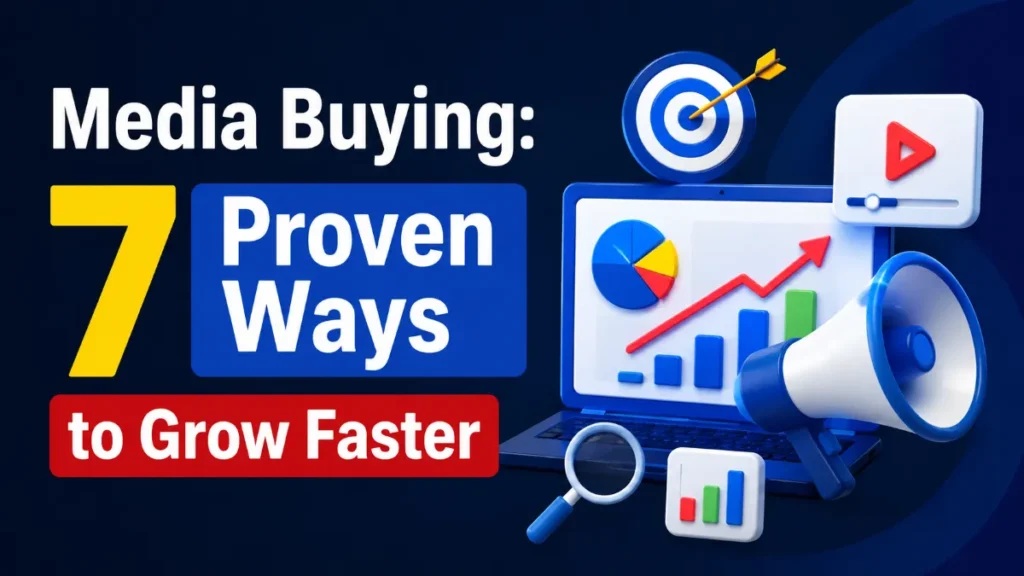
Media Buying helps businesses reach the right people through paid campaigns on Facebook, Instagram, Google Ads, and YouTube. With the right audience strategy, creative testing, budget control, and conversion tracking, paid advertising can turn attention into qualified leads or sales. Axelid builds client-focused campaigns around real business goals rather than chasing impressions alone.
Many advertisers lose money because they launch campaigns without clear tracking, a defined offer, or a reliable testing plan. Axelid combines platform expertise with practical marketing strategy so businesses can make better decisions at every stage of a campaign.
Effective Media Buying is not simply purchasing ad space. It is a continuous process of matching the right message with the right audience while measuring meaningful business outcomes.
What is Media Buying and why does it matter?
Media Buying is the process of planning, purchasing, managing, and optimizing paid advertising placements across digital platforms. The goal is to use an available budget efficiently while generating useful actions such as purchases, enquiries, app installs, bookings, or qualified website visits.
A campaign that receives 50,000 impressions may look impressive yet produce little commercial value. A smaller campaign that generates 20 qualified enquiries at a sustainable cost can be far more valuable. That difference is why experienced media buyers focus on conversion quality rather than surface-level reach.
How is Media Buying different from boosting a post?
Boosting a post is usually a simple way to increase visibility for existing content. Professional Media Buying uses deeper controls such as audience segmentation, campaign objectives, placement selection, bid strategy, conversion events, and structured experiments.
- Boosting: Useful for quick awareness or engagement on selected content.
- Media Buying: Designed around specific outcomes such as leads, purchases, or registrations.
- Campaign management: Includes tracking, testing, optimization, and performance reporting.
For example, a local service business may use an engagement boost to promote a useful video. A properly managed lead campaign can then target relevant audiences with a clear consultation offer and a tracked enquiry form.
Boosting can increase visibility, but professional Media Buying gives you greater control over targeting, measurement, testing, and budget decisions.
How does Axelid create high-converting advertising campaigns?
Axelid creates high-converting campaigns by connecting business objectives with audience research, persuasive creative, accurate tracking, and ongoing optimization. The Axelid Team starts by understanding the offer, customer journey, sales process, and acceptable acquisition cost.
1. Clarify the offer and conversion goal
Every campaign needs one primary action. Depending on the business model, that action might be purchasing a product, submitting a lead form, requesting a quote, or starting a free consultation.
A vague message such as “Learn more about our services” often creates less urgency than a specific benefit such as “Request a website performance review.” The wording must remain accurate and should reflect what the business can genuinely deliver.
2. Research the audience
Axelid reviews customer needs, search behavior, location, device usage, previous interactions, and buying intent before building audience segments. A broad audience may work for a strong consumer product while a specialized B2B service may need more focused messaging.
- Cold audiences who have not interacted with the brand.
- Warm audiences who watched a video or visited a landing page.
- Remarketing audiences who added an item to a cart or started a form.
- Existing customers who may respond to a related offer.
3. Match the creative to the platform
Facebook and Instagram often perform well with visual storytelling, short videos, carousel formats, and customer-focused messages. Google Ads can capture existing search demand through relevant keywords and clear ad copy. YouTube supports video-led awareness, education, and remarketing.
The same advertisement should not be copied across every channel without adaptation. A 15-second vertical video may suit Instagram Reels while a search ad needs concise wording that matches the user’s query and landing page.
4. Build a useful landing experience
Traffic alone does not create conversions. The landing page should repeat the core promise, explain the next step, load efficiently, work well on mobile devices, and make contact or checkout simple.
If an ad promotes a consultation, the landing page should not send visitors to a general homepage with several unrelated choices. A focused page with a short form and clear service details usually creates a more consistent user journey.
5. Install accurate tracking
Axelid uses conversion tracking as the foundation for responsible optimization. Depending on the platform and website setup this may include Google Ads conversion tracking, Google Analytics 4 events, Meta Pixel events, enhanced conversions, and server-side measurement where appropriate.
Before increasing a budget, the team checks whether reported conversions represent genuine business actions. A form submission should be tested from a real device and connected with the client’s sales process when possible.
Axelid improves campaign potential by treating the advertisement, audience, landing page, and tracking setup as one connected system.
Which platforms should you use for paid advertising?
The best platform depends on where your audience makes decisions and what type of conversion you need. Facebook, Instagram, Google Ads, and YouTube can work together, but each channel plays a different role in the customer journey.
| Platform | Best suited for | Useful campaign approach |
|---|---|---|
| Audience discovery, lead generation, and remarketing | Test multiple messages and use qualified conversion events | |
| Visual products, lifestyle offers, and mobile-first discovery | Use short-form video, strong visuals, and simple calls to action | |
| Google Ads | Capturing active search demand | Align keywords, ad copy, landing pages, and conversion tracking |
| YouTube | Video awareness, education, and remarketing | Lead with the central message and make the next step clear |
Google recommends measuring conversions that matter to the business rather than relying only on clicks. Its official Google Ads conversion tracking guidance explains how advertisers can measure actions such as purchases, sign-ups, and calls.
For a new brand, Axelid may use social platforms to test creative angles while Google Ads captures users already searching for a relevant solution. The right mix depends on budget, competition, sales cycle, creative assets, and geographic reach.
Choose platforms based on customer intent and business goals. A platform is valuable when it can reach relevant people and support measurable actions.
How should you manage a Media Buying budget?
A Media Buying budget should be managed through controlled testing rather than sudden large increases. Start with a budget that can produce enough data to compare audiences and creatives without putting the business under financial pressure.
For example, a campaign may begin with three creative variations and two audience groups. After a defined testing period, the weaker combinations can be reduced while stronger combinations receive more budget. The decision should consider conversion quality rather than one unusually cheap click.
- Set a practical test budget based on the product price and sales cycle.
- Choose one primary conversion event for the initial campaign.
- Test different hooks, formats, audiences, and landing page messages.
- Review results at a consistent interval instead of reacting to every hourly change.
- Scale gradually when conversion quality and tracking remain stable.
Which metrics deserve attention?
- Cost per acquisition: The average cost of generating a desired action.
- Conversion rate: The percentage of relevant visitors who complete the target action.
- Return on ad spend: Revenue attributed to advertising divided by ad spend when reliable revenue tracking is available.
- Lead quality: Whether enquiries match the service area, budget, need, and buying intent.
- Frequency: How often the same audience sees an advertisement.
A low cost per lead is not automatically a success if the sales team cannot qualify those leads. Axelid reviews platform data alongside real business feedback so optimization does not reward meaningless activity.
A disciplined budget process protects spending and helps identify which audience-message combinations create commercially useful results.
What common Media Buying mistakes reduce campaign performance?
The most common Media Buying mistakes involve unclear objectives, weak tracking, poor landing pages, and decisions based on incomplete data. Avoiding these problems can improve efficiency before additional budget is added.
- Targeting everyone: Broad reach without a clear customer profile can create wasted impressions.
- Using one creative for too long: Audience fatigue may reduce engagement and increase costs.
- Optimizing for clicks only: Clicks do not prove that visitors are likely to buy or enquire.
- Sending all traffic to the homepage: A general page may not answer the specific promise made in the advertisement.
- Changing campaigns too frequently: Constant edits can make performance difficult to evaluate.
- Ignoring mobile users: A form that works poorly on a small screen can lose otherwise interested prospects.
One practical check is to complete the customer journey yourself. Open the ad on a mobile device, visit the landing page, submit the form, and confirm that the enquiry reaches the correct person. This simple test can reveal broken links, slow pages, confusing forms, or missing confirmation messages.
Better results often come from fixing the campaign journey before increasing ad spend.
Why choose Axelid for paid advertising management?
Choose Axelid when you want a coordinated approach to paid advertising and broader digital growth. The agency can connect Media Buying with web design, e-commerce solutions, SEO, content strategy, branding, graphic design, app development, and business growth consulting.
This broader view matters because advertising performance is influenced by more than the ad itself. An unclear brand message, weak product page, slow website, or incomplete follow-up process can reduce the value of otherwise relevant traffic.
What can you expect from Axelid Solutions?
- Campaign planning built around your business objective.
- Platform-specific advertising for Facebook, Instagram, Google Ads, and YouTube.
- Creative and copy testing based on audience response.
- Conversion tracking checks and performance-focused reporting.
- Clear communication from the Axelid Experts throughout the engagement.
- Recommendations that consider both advertising data and customer experience.
Axelid does not present advertising as a guaranteed shortcut. The team focuses on high-quality support, transparent decision-making, and practical improvements that can be evaluated over time. That approach makes it easier for a business owner to understand what is working and what needs adjustment.
If you are preparing a new launch, struggling with inconsistent leads, or unsure which channel deserves your budget, Partner with Axelid for a campaign assessment. The right starting point is a clear review of your goals, audience, offer, tracking, and current customer journey.
Axelid combines paid advertising expertise with connected digital services so campaign decisions support the full customer journey.
What questions do businesses ask about Media Buying?
Media Buying becomes easier to evaluate when the campaign goal, measurement method, and platform role are clear from the beginning.
Is Media Buying suitable for small businesses?
How much should a business spend on advertising?
Which is better for leads: Facebook Ads or Google Ads?
How long does it take to evaluate a campaign?
Should I run Facebook, Instagram, Google Ads, and YouTube together?
Can Axelid help with landing pages and tracking?
What should I prepare before contacting Axelid?
The best campaign plan comes from matching your objective and resources with the platforms most likely to influence your customers.
How can you take the next step with Axelid?
Start by identifying one measurable business outcome such as qualified leads, online purchases, bookings, or app installs. Then review whether your offer, landing page, tracking, and follow-up process are ready to support paid traffic.
Axelid can help turn that review into a practical advertising plan for Facebook, Instagram, Google Ads, or YouTube. With clear communication and ongoing analysis, you can make informed Media Buying decisions while keeping the customer experience at the center of the work.
Choose Axelid when you need a professional digital partner that values strategy, clarity, and measurable progress. Contact the Axelid Team to discuss your goals and explore a suitable campaign approach for 2026.
Sources and trust signals
Campaign recommendations should be checked against current platform documentation because advertising interfaces and measurement options change. For Google Ads setup guidance use the official Google Ads resource linked in this article. Businesses should also review platform policies before launching campaigns and ensure that advertisements make accurate claims. A thoughtful plan, accurate measurement and policy-compliant messaging create a stronger foundation for sustainable paid advertising.